
Muscogee Booking Photos Explained
A booking photograph documents appearance during an arrest and booking event. Release does not erase the original agency record, but it may remove the person from a live jail view. The reviewed Muscogee eCourt pages do not promise a photo for every jail record or a searchable archive of photos for people no longer in custody.
Start by identifying the custody system. A Muscogee County Jail photo belongs to the sheriff's booking record. A GDC offender photo concerns state corrections and may not be the county booking image. A sex-offender registry photo applies only to a person with a registration duty. News and copied images are secondary sources.
Muscogee Photo Discovery Channels
Use the channel that created the record. Availability can vary by person, case, and disclosure rule.
| Channel | Photo access |
|---|---|
| eCourt Jail Search | Official jail-record route; no photo is promised for every current or released record. |
| Sheriff records request | Ask for any releasable booking photograph tied to a named booking. |
| GDC Find an Offender | Photos, if available, appear in result lists and individual state records. |
| Muscogee OffenderWatch | Registry images only for people subject to sex-offender registration. |
| VINELink | Custody-status tool, not a guaranteed photo archive. |
| News or copied sites | May be stale, mislabeled, or detached from the final case outcome. |
Confirm identity with a booking number, SO number, date, or court case. A photo alone does not establish release status, disposition, or current supervision.
Request a Muscogee Booking Photo
If the photo no longer appears online, request it from the sheriff records custodian. Keep the request narrow and tied to one booking.
- Collect the full name, date of birth if known, approximate booking date, booking number, and case number.
- Open the Muscogee Sheriff Open Records Request page and use its form or email mcsoorr@columbusga.org.
- Ask for the public booking and release record plus “any releasable booking photograph” for that booking.
- Send mail or deliver the request to Records Custodian, Muscogee County Sheriff's Office, 100 10th Street, Columbus, GA 31902, if email is not suitable.
- Review any fee estimate, redaction notice, or citation to a disclosure limit before narrowing or accepting the request.
Georgia law permits lawful copy and retrieval fees. Sealed, juvenile, victim, medical, or other protected material may be withheld or redacted. A booking entry can be releasable even when a photograph or part of the case file is not.
Muscogee State-Offender Photos
The GDC Find an Offender form lets users search active and inactive state offenders. It states that photographs, if available, display automatically on individual records. Search fields include name, description, sentence status, primary offense, conviction county, GDC ID, and case number. Muscogee County can be selected as conviction county.
A GDC image is strong identity evidence for a person who entered state custody. It is not necessarily the Muscogee County Jail booking photo. Search both active and inactive scope when release is believed to have occurred, and independently verify the record as GDC's disclaimer directs.
Muscogee Registry Photos Are Narrow
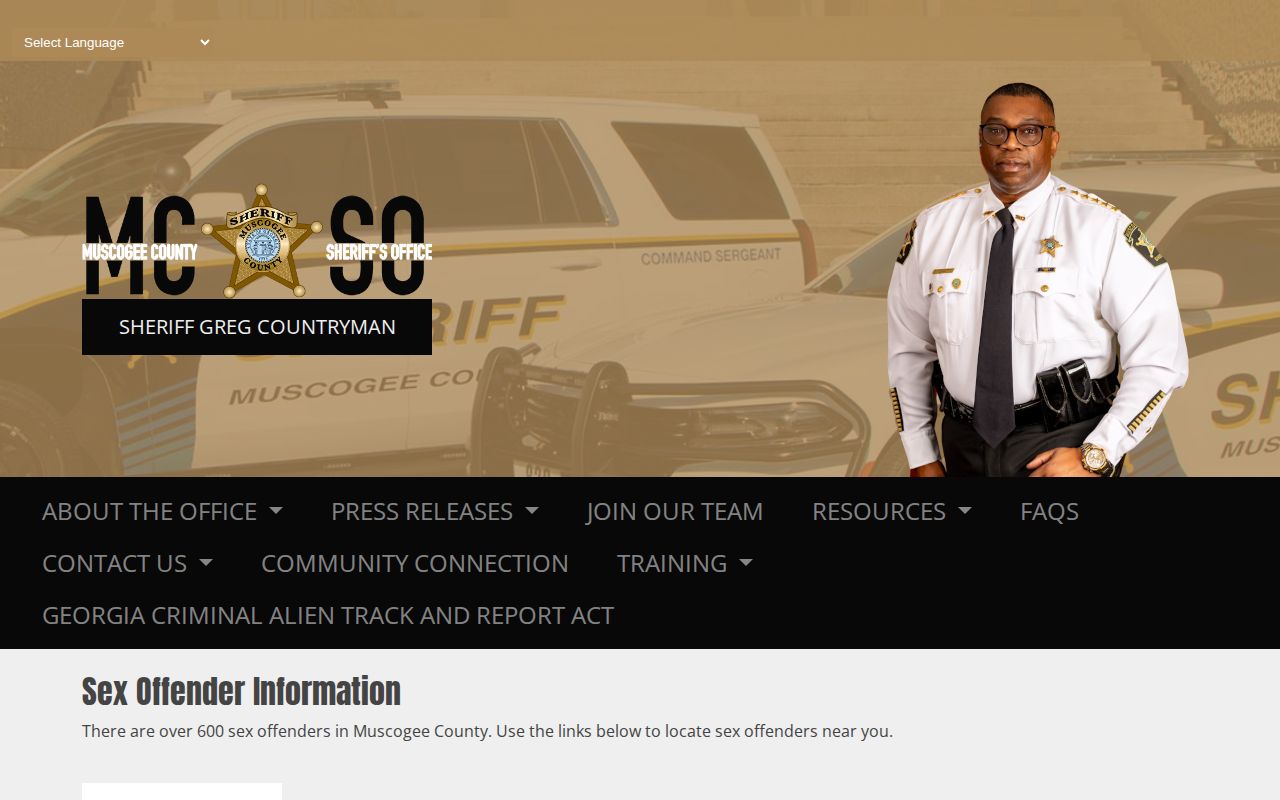
The sheriff's Sex Offenders page links an OffenderWatch-powered search. Registry photos concern registrants only. A released person may never appear there, while a registrant can remain listed long after release because registration is a separate legal duty.
The captured sheriff page shows this narrow channel.
Muscogee Mugshot App History
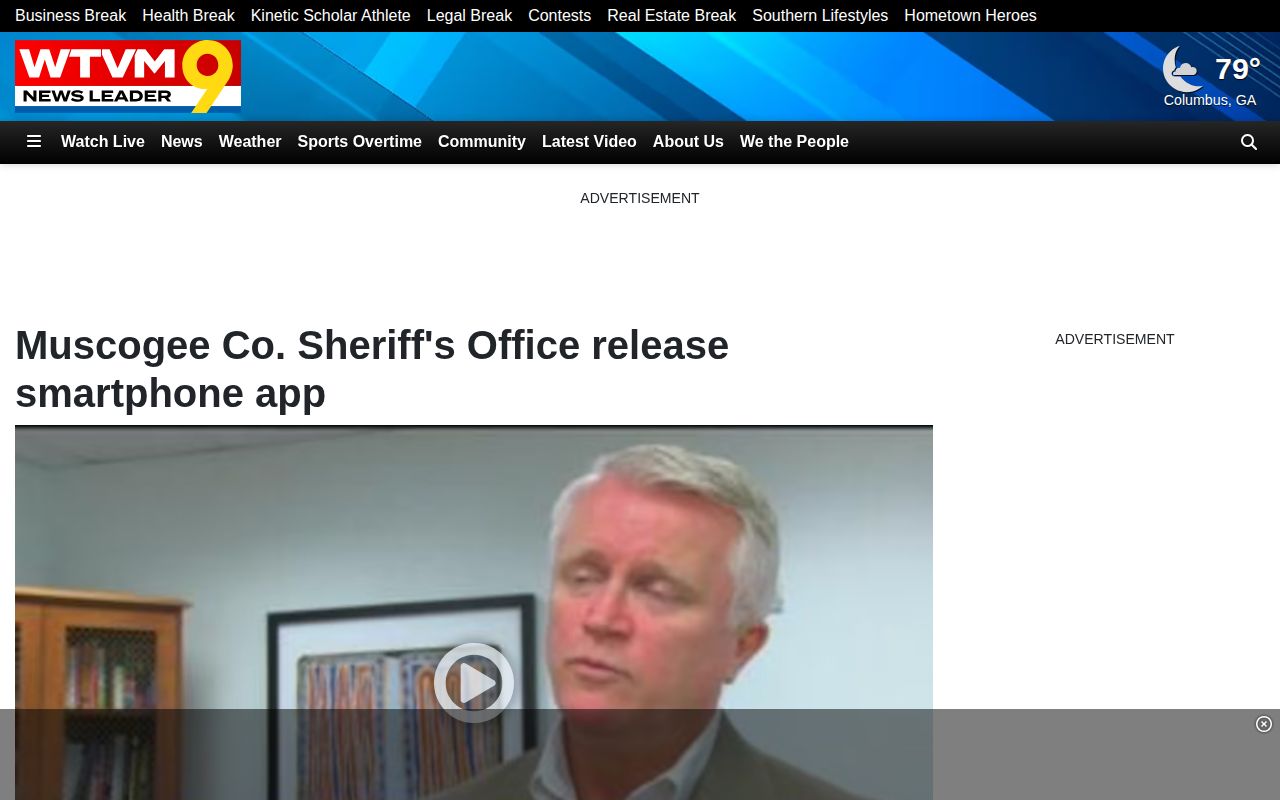
A 2015 local report said the sheriff launched an iPhone and Android app with jail-inmate, sex-offender, and wanted-person searches.
The present sheriff VINE page links VINELink mobile access for custody alerts. VINELink is not described as a booking-photo archive. Use the current official jail and records routes instead of assuming an older app remains supported.
Georgia Mugshot Disclosure Limits
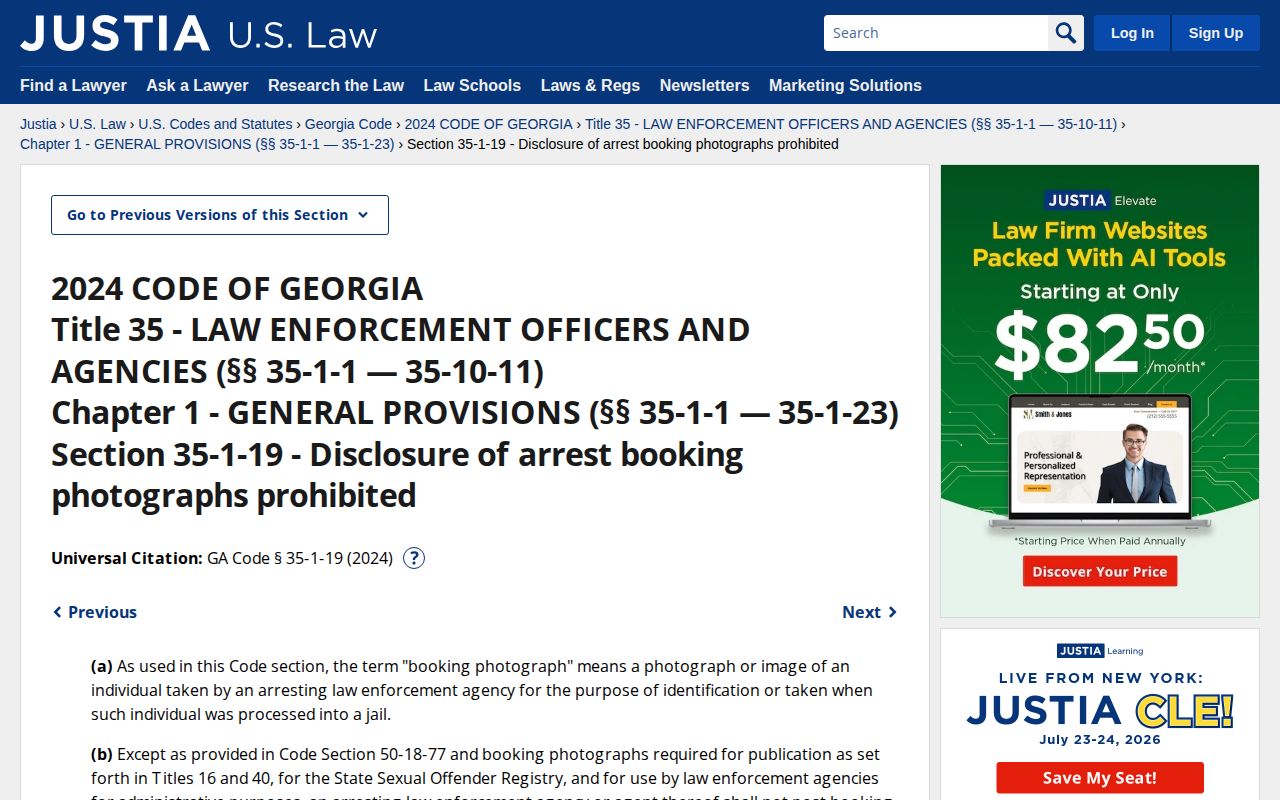
Georgia has rules aimed at harmful publication and pay-for-removal practices. O.C.G.A. § 35-1-19 restricts a law-enforcement agency from providing a booking photograph when the proposed use may place it on a publication or website that requires payment or other consideration for removal.
The statute screenshot captured for this page shows that disclosure limit.
Use official photos to identify the correct public record. Do not treat a photo as proof of guilt, release reason, or current custody.
Remove a Copied Georgia Mugshot
The Georgia Attorney General's mugshot website guidance explains O.C.G.A. § 10-1-393.5. In qualifying circumstances, a commercial website must remove an arrest booking photograph at no charge within 30 days after receiving a written request. Follow the site's stated contact process and keep proof of the request.
Record restriction is different. Georgia generally uses that term rather than expungement. O.C.G.A. § 35-3-37 governs restriction of criminal-history record information, while sealing and First Offender Act discharge may affect public visibility in other ways. Restriction does not justify assuming every copy disappears from every source.
Verify Muscogee Photo Identity
Pair any image with the Muscogee released-inmate record search. Check the booking number, dates, court case, charges, disposition, and release record. If the person was released recently, the 24-Hour Release List fallback explains why there is no official same-day gallery.
Third-party pages and local news can preserve an old image after the official record changes. They may omit dismissal, bond, record restriction, or later disposition. Prefer sheriff, clerk, GDC, and registry records for current context, and do not pay a site merely to confirm whether a public record exists.
Muscogee Photos Need Case Context
A booking photo records one point in an arrest process. It does not show whether a charge was declined, dismissed, resolved, or reversed. Search eCourt by name, case number, booking number, or SO number. Judgments, warrants, hearings, and dispositions provide legal context.
Record restriction can reduce public visibility. Court sealing and First Offender Act discharge follow their own rules. Do not bypass a restricted result through copied-photo sites. Ask the clerk or record owner what remains public.
If two photos seem to show the same person, compare source agency, booking date, and identifier. Different bookings produce different photos. A GDC image can also postdate the county image.
Muscogee Official Photos Come First
Commercial sites can copy a photo while dropping its date, case number, source, or outcome. News photos are not official release records. Neither proves current custody. Check Jail Search, the sheriff custodian, GDC, or the narrow registry source that fits the record.
VINELink can help verify a custody change, though it does not guarantee an image. The court portal explains bond and disposition. Together, those records keep an old photo from being read as a current-custody sign.
A request should stay tied to identification and public-record verification. Identify the booking, ask for what is releasable, and respect any cited restriction.
Muscogee Booking Photo Requests
Write the request so the custodian can separate the photograph from the rest of the case file. Name the arresting or booking agency, the approximate booking date, and the booking number if known. Ask for the photograph tied to that one event. If several bookings exist, specify which one is relevant rather than asking the office to choose.
The agency may produce the booking entry while withholding or redacting another item. Georgia open-records law does not erase exemptions. A denial or partial response should identify the legal basis used by the custodian. If the issue is a sealed court case or restricted history, direct the visibility question to the clerk or the agency responsible for that record.
Official images also need date context. A county photo can remain accurate as a record of appearance on booking day while being a poor description of current appearance. A state corrections photo may have been taken later. Registry photos follow registry duties and update practices. Always keep the source and record date with the image.
Muscogee Photo Removal Records
Send a commercial-site removal request in writing and retain a copy, delivery proof, the page address, and screenshots. The Attorney General’s guidance describes the qualifying outcomes and the no-charge removal duty. It does not make the sheriff responsible for copies posted by an unrelated publisher.
For an official source, ask the record owner whether restriction, sealing, correction, or a disclosure rule affects the image. Georgia record restriction changes access to eligible criminal-history information. Court sealing controls specified court material. Neither process should be described as a promise that every cached or copied image vanishes at once.
When a copied page misstates identity or outcome, preserve the official booking and court records that show the error. The strongest correction request points to the exact mismatch. Avoid services that demand payment merely to review an official public record or that promise removal from sources they do not control.
Muscogee Photo Source Labels
Whenever an official photo is saved or cited, retain the source agency, booking or offender number, and image date if shown. Those labels prevent a county booking image from being confused with a later GDC or registry photo. A cropped copy without context should be traced back to its record owner. If no official source confirms it, describe it as unverified rather than assigning it to a Muscogee release event.
A released person may have no publicly available image at all. Do not infer that a missing photo means the booking did not occur. Confirm the text record and respect the custodian’s disclosure decision.